
A place to belong: Being young, Black and Catholic


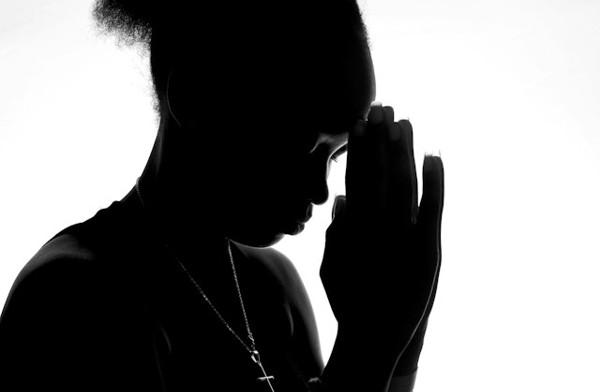
On the latest episode of Things I Wish I Knew, Grace speaks about faith, identity, community and her experience of finding her way back to Catholicism. What she has to say about finding her personal place in a universal Church is variously consoling and challenging, but always drawn from her desire for a relationship with Christ and with her sisters and brothers in faith.
What does it mean to find a home in the Church when your experience of faith, culture and identity does not always fit neatly together?
For Grace Njoku, a young Black Catholic, this question has followed her on her journey from a largely cultural understanding of Catholicism, through a period of exploring another Christian tradition, and eventually back to the Catholic Church with a renewed appreciation for its sacramental life and community.
Growing up in Ireland, Grace’s understanding of religion was shaped in part by her family. Her father was a lapsed Catholic, while her mother came from a Protestant background. Faith was present, but Grace describes her early understanding of Catholicism as being more cultural than personal. It was something familiar, part of her surroundings and upbringing, without necessarily being something she had consciously chosen or explored for herself.
That changed when she moved to London as a teenager. Away from the environment in which she had grown up, Grace began to ask deeper questions about what she believed and what a relationship with God might look like.
An invitation from a friend led Grace to a non-denominational church, jumpstarting a new chapter in her life. There she encountered something that had been missing from her previous experience: a vibrant community and an emphasis on a personal relationship with Jesus. For around six months, she became immersed in this different expression of Christian life. The experience helped her discover a more personal dimension to faith, challenging some of her assumptions about what it meant to be a Christian.
Yet, in time, Grace began to feel drawn back towards Catholicism. Rather than simply returning to what was familiar, she began to explore the tradition for herself. She researched the faith and rediscovered the sacraments, the Mass and the richness of the Catholic tradition. Her return was not simply a matter of going back to where she had started. It was a process of encountering the Church anew and recognising something in its sacramental and communal life that she had come to value.
Grace’s experience also raises questions about what it means to belong to the Church as a young Black Catholic in Britain.
Being part of a minority can bring a particular awareness of whether you are represented, understood and welcomed. Grace speaks openly about moments when she has felt that she stands out, and about the importance of finding communities where people can bring their whole selves to their faith.
This is not simply a question of numbers or representation. It is about belonging. A parish can be welcoming in intention while still leaving some people unsure whether there is a place for their particular experiences, cultures and perspectives. For Grace, finding community has been an important part of living out her faith, and her story invites the Church to think seriously about how to create that sense of belonging meaningfully.
At the heart of Grace’s reflections is the conviction that faith is not something we are meant to live alone. Scripture repeatedly presents Christian faith as communal. We are called into relationship with God, but also into relationship with one another. Grace’s own journey shows us how important those relationships can be, particularly in moments when faith is changing or being rediscovered.
Her story also challenges the idea that cultural identity and Catholic identity have to compete with one another. For someone navigating different cultural and religious influences, the question can sometimes become whether one part of their identity needs to be set aside in order to belong. Grace’s experience, though, presents another possibility: faith can become a place where different aspects of who we are are together rather than divided.
This has implications beyond Grace’s own story. Her experience invites parishes and Catholic communities to ask who feels at home among them, whose voices are heard and who might still be standing at the edges. It also encourages each of us to consider the communities we belong to and the communities we help to create.
Welcoming people into the Church is not only about opening the door. It is about creating spaces where people can be known, where their experiences are taken seriously and where they can discover that their individual story has a place within the much larger story of the Catholic faith.
Grace’s journey from a cultural familiarity with Catholicism, through a period of searching, and back to a deeper appreciation of the Church, is ultimately a story about belonging. It shows how faith can grow through questioning and exploration, and how community can help sustain that faith once it is found.
Listen to 'Things I Wish I Knew About Being Young, Black & Catholic' and to get all of our new episodes and catch up on our back catalogue, subscribe now >>
You can follow us on Instagram: @tiwik_pod.