
Impunity is not immunity


Recent news headlines have been dominated by stories about public figures who seem to have acted with impunity, says Patrick Riordan SJ. But what do we understand ‘impunity’ to mean, and how does behaving in this way transgress the norms on which public order relies?
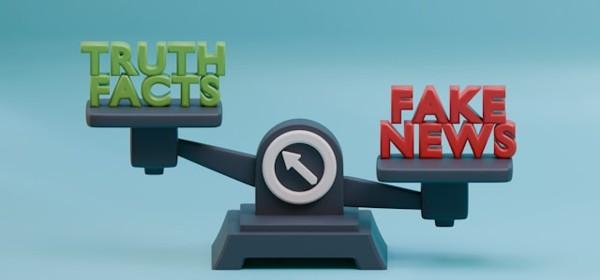
Today, the distance between the gospel exhortation to truth and the practices of some politicians and other public figures appears unbridgeable. The mandate we find in the Letter of James, ‘Let your “Yes” be yes and your “No” be no, so that you may not fall under condemnation’ (Jas 5:12), is not adhered to in our world in which lying and deception are so common. ‘Fake news’, ‘alternative truths’, have found their own legitimation, and there seems to be no shame in and little consequence to being caught out in lies and empty promises, and other forms of sharp practice. Impunity is the prevalent attitude for many in public life.
They lie, they violate human rights, they break the law, they ignore the strictures of international law, they disregard settled treaties, they traffic and abuse young women, they betray state secrets. All seemingly with impunity. This is a short list of the actions and events providing our news headlines recently. Readers can identify who ‘they’ are with various names.
But will they always get away with it? Those who long to see justice done, who ‘hunger and thirst for what is right’, are frustrated with the apparent success of the wrongdoers whose assumption of impunity appears to be correct. With Gerard Manley Hopkins they may cry out to God in their anguish: ‘Why do sinners’ ways prosper? and why must disappointment all I endeavour end?’ The Jesuit poet is recasting the complaint of the prophet Jeremiah, reflecting the experience of good people over millennia who seem to be ineffective in the face of great evil in the world: ‘Oh, the sots and thralls of lust Do in spare hours more thrive than I that spend, Sir, life upon thy cause.’[1]
This reality of the apparent imbalance between evil and good that Hopkins and Jeremiah give voice to is acknowledged in the old Catechism answer to the question of why there is need for a general judgement beyond the particular judgement in which each one is answerable for their actions: ‘A general judgement is required in order that the providence of God, which sometimes permits the good to suffer and the wicked to prosper in this life, may appear just before all.’ Note that this answer refers to the revelation of God’s justice and wisdom. There is no mention here of punishment, but what is clear is that those who acted with impunity, with the assumption they would not be punished, will be shown the wrongness of their deeds, and at least in that sense will have to answer for what they have done. Impunity, then, is not immunity – so what is it?
My desktop’s thesaurus lists synonyms: licence, exemption, liberty, latitude, immunity, but these do not capture the negative judgement implied in the use of the term. Some dictionaries define it as ‘freedom from punishment’, but mistakenly, I believe. Impunity is used to indicate that something wrong is being done by people who ought not do it, who should be punished for it, but act in the confidence that they will not be punished. With this understanding, we can see that they act as if they had permission to do so, as if they were exempt from the requirements of the law, and as if they were immune from prosecution. This sense of impunity makes them shameless and arrogant in their defiance of criticism and public opinion.
The opposite of impunity, thus understood, is the obligation to accept judgement on our actions and to receive any due punishment. This has been an underlying theme in philosophical reflection on social and political order, since general impunity would lead to a breakdown in all public relations. We can get an insight into the value and purpose of adhering to social order when we reflect on the practice of swearing an oath.
There is curious irony in the combination of the three categories of people who could not be tolerated according to John Locke. In his Letters on Toleration (1689, 1690, 1692), he advised against tolerating those who if they came to power would not tolerate you, those who owed allegiance to a foreign prince, and those who could not take an oath. The irony is not immediately apparent but becomes striking when the first two categories are associated with people who believe in God, while the third category is of those who declare that they do not believe in God. Catholics and Muslims are the principal targets of the first two exclusions. They are not to be tolerated because from Locke’s perspective they do not (or at least in the case of the Catholic Church did not, prior to the changes made at the Second Vatican Council) embrace a policy of toleration of those who reject their teaching. And in the second instance, they were bound by their faith to obey a religious authority who resides outside the jurisdiction and could command their consciences, whether the pope in Rome, or the caliph of Istanbul. As a result, they could not be presumed to contribute to political debate as free citizens making their independent views known.
The third category is the curious one from our 21st-century perspective. Atheists could not be tolerated as fellow citizens, precisely because their lack of faith entailed that they could not honestly take an oath. On those public occasions which required the taking of an oath, whether as a witness in a court case, an official taking up office or a citizen completing a formal declaration, atheists could not swear, ‘as God is my judge’, or ‘so help me God’. Why, from the perspective of John Locke at the end of the seventeenth century, did this matter? Why did the inability to swear an oath compromise the position of atheists as fellow citizens?
The answer boils down to the fundamental question for social and political life: can I trust my neighbours? What reasons can I have for taking them at their word? The question is not about the members of one’s immediate circle, whether family or neighbourhood, since these people are well known and their characters are well established. Everyone knows who can be relied upon to turn up as promised, who will pull their weight in communal undertakings, and who the shirkers are likely to be. But beyond the locality, when most fellow citizens are unknown and one has to do business with strangers, how do you know whom to trust?
The great English philosopher Thomas Hobbes had provided one key to the answer: fear (Leviathan, 1650). You can trust someone who gives their word when you can be sure that they fear the consequences of breaking their promise. The fear of punishment will be sufficient to hold people to their promises, but for that, Hobbes insisted, we have to establish a civil power which will effectively prosecute and punish those who break their word. In his own words: ‘Covenants, without the sword, are but words, and of no strength to secure a man at all.’ Hobbes recommended relying on strong public authorities and effective policing.
From Locke’s perspective, Hobbes’s solution was unsatisfactory for various reasons, but one element he retained, at least in his thinking on toleration, was fear as key to public trust. Why can we not trust a person who does not believe in God? For the Letters on Toleration, they are not worthy of trust because they do not fear the consequences of breaking their oath. Whoever takes an oath calls on God as witness and declares their willingness to be judged by the creator should they fail to deliver on their promise. Now it is not the fear of the civil power that motivates compliance, but fear of God. At stake in the taking of oaths is the truth. Witnesses in court are required not only to give an account of what had happened to the best of their knowledge, but also to declare that the account they give is true. Where the truth of the matter is contested, the assurance is sought that those giving witness are aware of their obligation to tell the truth, and the explicit reference to being answerable to God reinforces that awareness.
Oaths in the sense of ‘swearing before God’ are no longer required in court or in other formal public occasions. It is sufficient to say, ‘I declare…’ or ‘I affirm…’; one no longer has to say, ‘I swear…’. Nevertheless, the notion of an oath before God remains as a fossil in our language. There is a public official – a Commissioner of Oaths, sometimes called a Public Notary – whose function it is to receive and record formal declarations and affirmations, which are relevant for public business.
Swearing an oath might have been regarded at one time as an occasion when religion and politics necessarily intersected. However, it was religious people above all who took objection to the requirement to swear an oath, whether in court when called to give witness or in accepting appointment to a public office and having to swear an oath of allegiance. Their objections were rooted in their religious sensitivities. The command not to take the name of the Lord in vain was understood to apply to occasions when God was called to witness. And the words of Jesus were also invoked – in the Sermon on the Mount in the Gospel of Matthew, he comments on the commandment not to bear false witness:
‘Again, you have heard that it was said to the men of old, “You shall not swear falsely, but shall perform to the Lord what you have sworn.” But I say to you, Do not swear at all, either by heaven, for it is the throne of God, or by the earth, for it is his footstool, or by Jerusalem, for it is the city of the great King. And do not swear by your head, for you cannot make one hair white or black. Let what you say be simply “Yes” or “No”; anything more than this comes from evil.’ (Matt 5:33-37)
The same message is communicated in the letter of James:
Above all, my beloved, do not swear, either by heaven or by earth or with any other oath, but let your ‘Yes’ be yes and your ‘No’ be no, so that you may not fall under condemnation. (Jas 5:12)
Some Christian believers responded to these words by refusing the practice of taking an oath, not only in everyday communication, but also on formal public occasions when the state seemed to require it. They took the opportunity to show their allegiance to a higher authority than that of the state, and to declare their commitment to truthfulness out of a sense of religious obligation. And for this too they had biblical warrant, since Jesus, in foretelling the coming persecutions his disciples would face, encouraged them by saying:
‘Do not fear those who kill the body but cannot kill the soul; rather fear him who can destroy both soul and body in hell.’ (Matt 10:28)
The fear of punishment on which civil powers relied to compel compliance evaporated relative to the greater fear: the respect to be shown to the officers of the state paled in comparison with the respect to be shown to God. Accordingly, many Christians and other believers refused to take an oath and preferred instead to make their declaration, and to affirm the truth of what they said and the reliability of their promises.
That passage from chapter 10 in Matthew’s Gospel in which Jesus counsels his disciples not to fear also contains the assurance of ultimate revelation of the truth, which is also alluded to in the old Catechism, as cited above. ‘So have no fear of them; for nothing is covered that will not be revealed, or hidden that will not be known’ (Matt 10:26).
The central mystery of our faith is that Christ’s death on the cross led to his resurrection. The destruction of an innocent man by the manifest injustice of civil and religious powers was vindicated by his rising from the dead. This promise of resurrection assured us by the example of Christ is the ground for our Christian hope that the suffering of the innocent will be vindicated in the providence of God, and the injustices perpetrated by the shameless and arrogant in this life will be shown up for what they are. Their supposed impunity is certainly not immunity.
Patrick Riordan SJ is Senior Fellow in Political Philosophy and Catholic Social Thought at Campion Hall, University of Oxford. He is the author of Human Dignity and Liberal Politics: Catholic Possibilities for the Common Good (Washington, DC: Georgetown University Press, 2023) and co-editor, with Gavin Flood, of Connecting Ecologies: Integrating Responses to the Global Challenge (Abingdon, Oxon: Routledge, 2024).
[1] Gerard Manley Hopkins, ‘Thou art indeed just, Lord, if I contend’: https://www.poetryfoundation.org/poems/44404/thou-art-indeed-just-lord-if-i-contend